Skip to content
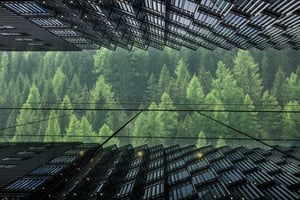
A view from below looking upwards at two light-green trees that appear to be standing inside a large glass building.

Sustainability in Trade Show Construction — Our Way

Sustainability in trade show construction is not a short-lived trend; it forms the foundation for future-proof and loyal brand leadership. We combine high-impact aesthetics with environmental responsibility, creating powerful brand presences while conserving valuable resources.

ISO 20121 Sustainable Event Management
ISO 14001 Environmental Management
60/100 EcoVadis Score

Sustainability in Trade Show Construction: Why It Matters to Us

Trade show construction is all about design, speed, and individuality. And yet, it also traditionally involves heavy material consumption, transport, and temporary usage. We are convinced that the future of sustainable exhibition stands depends on how effectively we can rethink these factors.

This is not about claiming perfect solutions today. It is about taking genuine responsibility and continuously evolving our contribution, step by step.


01 Using resources with greater intention

02 Keeping materials in circulation longer

03 Streamlining material and transport flows more efficiently

04 Increasing transparency across supply chains

05 Making decisions clear, accountable, and traceable

Our Mission: Sustainability as a Transformation Process

Sustainability is deeply linked to the evolution of our industry as well as to the question of how we want to handle resources, materials, and supply chains responsibly in the future.

As a company in the trade show and event sector, we operate in an environment that is naturally material- and resource-intensive. That is precisely why we consider it our responsibility to challenge existing conventions and advance them in a targeted manner.

We have been developing sustainable trade show solutions for several years. Today, our focus is on making these approaches more structured, transparent, and measurably effective over the long term. Our goal is to progressively strengthen the connection between three core dimensions—ecological balance, social integrity, and economic efficiency—and realize them across our projects, always with a clear eye on practical feasibility.

Blick aus zwei modernen Glasfassaden auf einen grünen Nadelwald.
01

Ecological Balance

We rely on modular systems that enable the reuse of materials across multiple deployments. Our global hub strategy supports regional material storage and enables more efficient logistics processes. Furthermore, we use durable materials for creating the brand spaces and work closely with partners to expand reuse and circular approaches.
Blick von hinten auf Menschen unterschiedlicher Ethnien und Kulturen, die sich gegenseitig an die Schultern fassen.
02

Social Integrity

We act as a reliable partner committed to transparent and fair collaboration. Safety and integrity serve as the foundation for our international team, from the initial dialogue with potential clients to final on-site installation.
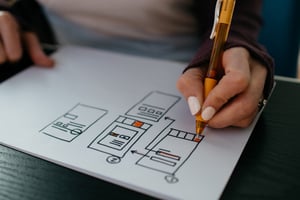
Nahaufnahme einer Skizze eines Prozesses, die gerade gezeichnet wird.
03

Economic Efficiency

Reusable systems act as a long-term investment for your brand: they ensure maximum budget adherence across multiple project cycles. Our proactive planning optimizes resource allocation while lowering costs for global rollouts.

Our Approach: Making Sustainability in Trade Show Construction Realistically Feasible

In trade show construction, sustainability is not a static benchmark, but an ongoing development process. Not every exhibition stand can be built completely sustainably today. Projects vary significantly in budget, timeline, design demands, and logistical conditions.

Accordingly, transparency is key to a credible strategy that makes progress verifiable. That is why we do not rely on blanket promises, but on concrete, actionable approaches that we continuously refine.

  • We identify improvement potential in every project
  • We offer alternative, resource-conserving solutions wherever sensible and feasible
  • We continuously refine our standards to define clear responsibilities and manage long-term progress
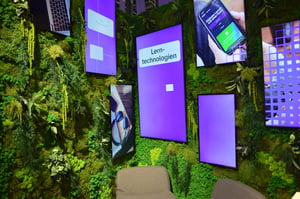
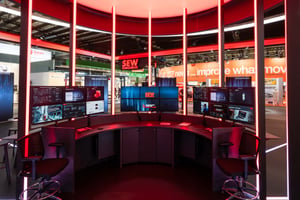
Green walls with monitors of various sizes hanging on them.

Reuse & Refurbishment

Components are stored, reused, or refurbished whenever possible: We store elements in our strategic hubs following each event and ensure the precise refurbishment of system components. This approach provides planning reliability for subsequent global projects and supports extended material use over multiple lifecycles.

Modular Systems & Circular Approaches: Scalable Circular Economy

Efficiency comes from intelligent structures: We place greater emphasis on modular designs that can be reused repeatedly and adapted flexibly. This allows materials to be utilized over multiple cycles for every global project. Together with partners and suppliers, we are increasingly evaluating how materials can be repurposed or fed back into circular loops after use.

A person is holding an Octanorm system component.

Global Hub Approach: Regional Strength for Lower Emissions

We utilize regional storage across our international locations: Proximity to project sites enables shorter freight routes and supports more efficient logistics planning. Our strategically located hubs in Europe, Asia, North America, and the Middle East ensure the efficient local delivery of structures for your events and trade shows.

A stylised network of orange lines within a glass structure.

Standards & Certificates: Security for Your CSR Balance Sheet

Verified quality builds trust: Our processes align with rigorous international standards and are continually refined to meet future requirements. In this way, we provide maximum planning certainty and proactively support you in achieving your sustainability targets.

This includes our ISO 20121 certification for sustainable event management as well as our participation in EcoVadis. We do not view these assessments as an ultimate end goal, but as tools to establish transparency, identify growth opportunities, and continuously advance our performance.
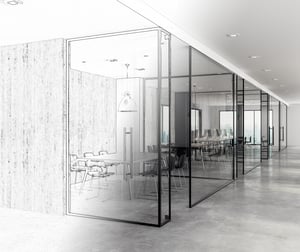
A sketch of a standardised office space.

“In exhibition stand construction, sustainability is not a snapshot in time, but a journey of development. We are honest enough to admit that we cannot change everything at once. However, we are consistent enough to take another step forward in every project. We see this approach as part of our corporate responsibility towards our clients, our staff and the industry.”
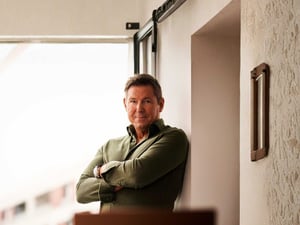
Dr. Magnus Ekerot CEO
The CEO of ET GLOBAL, Dr Magnus Ekerot, is standing with his arms crossed in front of a bright window.

Sustainability Embedded in Leadership and Responsibility

For us, sustainability is not an isolated topic, but an integral part of our corporate responsibility. That is why it is actively shaped by our leadership team and progressively integrated into core decisions and operations. Different organizational functions play specific roles, from developing sustainable offerings and operational execution to building data and management systems.

In recent years, we have established robust structures to integrate sustainability more deeply into our decision-making and processes. These are continuously refined to meet the growing expectations of our clients, employees, and other stakeholders.

The following overview illustrates how each department contributes to implementation:

Sales Makes Sustainability Visible

A clear, client-focused offer, consistent messaging in pitches, and genuine pilot projects with clients: This is how strategy converts into market relevance.

Process Excellence Translates Ambition into Feasibility

Evaluating sustainable materials and concepts, clean CO2e data collection at the project level, and step-by-step embedding of our standards.

Operations Brings Sustainability to the Floor

Decisions, supplier selection, and project execution follow clear sustainability requirements: pragmatic, circular in mindset, and suited for daily operations.

Finance Drives Rhythm and Transparency

Allocating resources for CO2e reporting and pilot projects, evaluating financial risks, and establishing robust KPI frameworks for governance and credibility.

Working cross-functionally, our Sustainability Officer coordinates core activities and supports the integration of sustainability criteria into day-to-day decisions and processes.

Strategic Sustainability at ET GLOBAL

Our sustainability strategy firmly anchors environmental action across all corporate divisions. Modular building systems and durable materials ensure efficient resource utilization and high reuse rates for global projects. Our focus lies on the continuous optimization of all processes to minimize greenhouse gas emissions. We embed sustainability through intentional leadership and ongoing accountability.

Transparency and Data: Our Next Step

Managing sustainability effectively requires reliable data. In recent years, we have established key foundations for capturing and evaluating relevant sustainability metrics. We are currently working to expand these frameworks and continuously improve our baseline data:

  • Advanced development of our CO2e carbon accounting

  • Optimization of data collection and data quality

  • Ongoing enhancement of our KPI and management system

Data evaluation for 2024 and 2025 is currently being finalized. Moving forward, it will serve as the foundation for further developing our sustainability initiatives and enabling transparent reporting.

Success Stories in Sustainable Brand Architecture

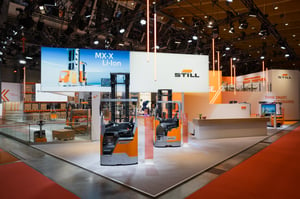
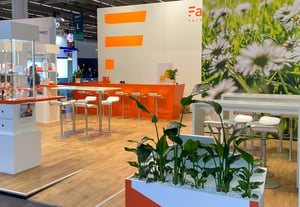
Real success stories best demonstrate how we transform abstract sustainability goals into tangible architecture. In doing so, we deliver brand presences that convince through a positive environmental record. Whether sustainable trade show formats, events, or exhibit booth construction, these completed projects illustrate the balance between design excellence and resource efficiency:
Plan your sustainable trade fair stand now

Trade show appearances and major events are dynamic and creative, but also material-intensive. Precisely for this reason, as a provider of exhibit and event solutions, we bear the responsibility to use resources efficiently, lower emissions, and establish transparent supply chains. That is why we are systematically professionalizing our sustainability structures and working to make our impact measurable across the entire value chain.

FAQs: Sustainability & Responsibility

How does ET GLOBAL contribute to the circular economy in trade show construction?

We rely on modular systems and durable materials that allow components to be used multiple times. Through this circular model, waste volumes are reduced and materials remain in service longer. In addition, we work with partners and suppliers to explore options for reusing, refurbishing, and returning materials to existing cycles. Our goal is to keep materials in use as long as possible and continuously advance circular principles.

What does ISO 20121 certification mean specifically for my project?

ISO 20121 confirms that sustainability at ET GLOBAL is not limited to isolated measures, but managed through a structured system with defined processes and responsibilities. For our clients, this means greater transparency, traceable decisions, and a structured approach to the continuous improvement of trade show and event projects.

How does ET GLOBAL reduce the carbon footprint of my event or trade show presentation?

A project’s environmental impact depends on many factors, including design, materials, logistics, and technical specifications. We work directly with our clients to identify where resource-conserving solutions can be implemented. Examples include modular systems, component reuse, and regional material storage through our international hub network.

Can sustainable trade show booths meet high aesthetic expectations?

Premium design and ecological responsibility form a harmonious unit at ET GLOBAL: We utilize innovative materials to deliver an outstanding visual presence. Our design team creates concepts where functionality and sustainability remain central design elements.

However, reality dictates that not every exhibit can be built 100% sustainably today. Projects differ significantly in budget, timing, design demands, and logistical parameters.

Our approach is therefore pragmatic: We identify improvement opportunities in every project and offer alternative, resource-conserving solutions whenever possible. Our objective is to make more sustainable solutions the standard over time without compromising project feasibility.

How does sustainable construction affect my trade show budget over the long term?

Sustainable solutions do not automatically lead to lower costs. Depending on material choices, design needs, and project objectives, individual measures may initially require higher upfront investments.

Potential economic advantages emerge primarily where components are reused, materials stay in service longer, or logistics processes become more efficient.

This is why we do not view sustainability in isolation as a cost factor or savings generator, but as part of long-term project and resource planning.

What do certifications and external ratings mean for ET GLOBAL?

Sustainability cannot be proven by single credentials alone. However, certifications and third-party assessments help us audit processes, identify areas for improvement, and make progress verifiable.

These include our ISO 20121 certification for sustainable event management as well as our EcoVadis rating. For us, they are not an end destination, but part of a continuous improvement journey.