
A commanding physical presence at today's international trade shows calls for forward-thinking concepts that translate the evolving digital landscape directly into architecture. Within the demanding media and technology sector in particular, brands and exhibit designers face a distinct challenge: translating complex software solutions into tangible, three-dimensional spaces. Visitors to media expos are no longer moved by conventional video walls; they seek meaningful interactions and an elegant balance between digital momentum and physical form. Informed by decades of industry evolution, our experience confirms one truth: only a deliberate symbiosis of cutting-edge technology and exceptional spatial design sustains meaningful dialogue with discerning audiences. This article explores the phenomenon of phygital intelligence and illustrates how visionary brand leaders are architecting tomorrow’s tech showcases today.
What Defines Phygital Intelligence in Physical Space?
The traditional boundary between digital interaction and physical architecture is rapidly dissolving in modern exhibition design. Phygital intelligence describes the deep integration of digital logic into physical spatial design to build a cohesive, intuitive visitor experience. It represents an evolved design philosophy that positions technology as an invisible bridge connecting human curiosity with brand substance. This synergy makes even the most intricate brand narratives accessible and engaging.
Merging Physical Presence and Digital Depth
At its core, this philosophy seamlessly unifies the distinct strengths of both realms within physical space. While physical three-dimensionality provides tactile reality, emotional grounding, and irreplaceable human connection, the digital layer unlocks limitless informational depth. Rather than remaining a passive scenic backdrop, intelligent architecture adapts dynamically to visitor behavior. Technology becomes an organic dimension of the environment that sparks dialogue naturally. The result is a transformative spatial journey that meets both the intellectual and emotional expectations of modern decision-makers.
Phygital Exhibition Design: Emerging Expectations of Millennials and Gen Z at Media Trade Shows
The expectations of digitally native decision-makers are fundamentally redefining traditional exhibition construction. Earning genuine mindshare on global stages today demands a harmonious union of technical excellence and spatial dramaturgy. Decades on the front lines have taught us that fleeting visual spectacles are no longer enough. Developing a nuanced understanding of this demographic serves as the cornerstone for resilient, future-ready brand spaces.
The Evolving Mindset of Digital-Native Decision-Makers
Younger Millennials and Generation Z came of age in an effortlessly connected world and expect information delivery to be intuitive and frictionless. They map these sophisticated UX expectations directly onto physical live platforms. Progressive exhibition design within the tech and media sectors approaches these demands as an opportunity to revitalize brand environments through deliberate spatial activation. The secret lies in seamless orchestration: the physical environment serves as an anchoring center, while the digital layer expands narrative depth on demand. This approach creates high-performance meeting spaces that match the intellectual standards of a tech-fluent generation.
Bringing Abstract Software Environments to Life in Three Dimensions
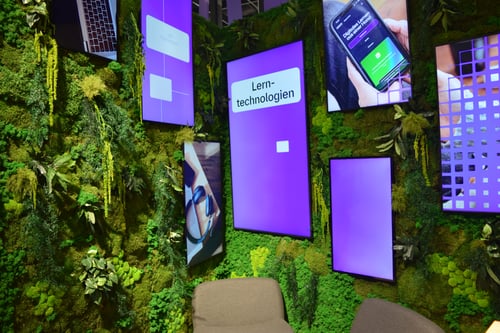
Translating data streams, cloud infrastructures, and complex algorithmic platforms into physical reality requires meticulous conceptual precision. Our design teams rise to this challenge by transforming abstract processes into tangible forms and compelling spatial storytelling. In cutting-edge TMT exhibit design, deploying evocative spatial metaphors—such as kinetic light pipelines and multi-layered, concentric pavilions—makes invisible digital value chains visually comprehensible and intuitive. Achieving these spatial translations demands mastery across the choice of materials, lighting, and real-time digital media. In this way, complex technical capabilities evolve into welcoming brand worlds that win audiences over through clarity, elegance, and substance.
Calm Technology: Stress-Free Tech Integration in Booth Design to Prevent Cognitive Overload
The ceaseless barrage of visual and acoustic stimuli across contemporary trade show floors quickly leads to sensory fatigue. Thoughtful technology integration within a booth tackles this issue by treating innovation not as a loud spectacle, but as a discreet, intuitive companion. By consciously stepping back from visual noise, we steer attention purposefully and carve out environments built for focus. What emerges is a tranquil, high-clarity atmosphere engineered for in-depth peer-to-peer business conversations.
Calm Technology and Ambient Sensors in Space
"Calm technology" anchors the human experience firmly at the center by keeping hardware subtly out of sight. Concealed ambient sensors detect visitor presence and movement, orchestrating digital content with effortless fluidity. Interactive zones spring to life only upon intentional approach, inviting intuitive exploration. This understated technology cultivates a welcoming atmosphere attuned to the audience's natural curiosity. Through this deliberate restraint, we spark genuine interest while cementing deep trust in the exhibitor's technological authority.
Mediatecture as a Reactive Media Facade
The convergence of media art and structural architecture creates surfaces that respond sensitively to their environment. These reactive media facades adjust their color palettes and visual energy in rhythm with the flow of visitors across the booth. This provides marketing leaders with an agile canvas to orchestrate the spatial mood seamlessly throughout the day. Designers employ dynamic mediatecture to unite emotional warmth and aesthetic precision, delivering a mesmerizing brand experience that captivates audiences without raising its voice.
Phygital Data ROI: Converting Anonymous Visitors into Qualified CRM Leads
A successful trade show presence is no longer judged solely by how striking a booth looks from the aisle. For strategic brand decision-makers, quantifiable performance is the decisive metric guiding forward-looking budget allocations. Connecting physical touchpoints with digital tracking systems makes event performance fully transparent and verifiable. A clearly defined transition between the physical spatial experience and the digital CRM guarantees pristine data integrity without friction or workflow breaks.
The Phygital Lead Funnel: Meaningful Interaction Over Anonymity
Engaging, educational interactions with digital exhibits motivate booth visitors to willingly exchange their contact details. Rather than handing out printed collateral that gets discarded, interactive stations offer personalized deep dives sent straight to their inboxes. Every touchpoint records actionable insights into each attendee's specific technical interests within the lead retrieval system. This qualified intelligence flows directly into the CRM, empowering sales teams to execute prompt, highly tailored follow-ups. In doing so, brands replace passive anonymity with valuable business relationships grounded in technical dialogue.
Proving ROI to the C-Suite and the CFO
Thoughtfully engineered TMT exhibition programs deliver dependable, hard metrics that go far beyond subjective post-show impressions. Modern analytics capture average dwell times, touchpoint engagement rates, and the precise volume of high-level consultations conducted. These measurable performance indicators establish a solid foundation for demonstrating marketing return on investment to leadership. As a result, CFOs and executive teams gain the predictability required to greenlight upcoming event investments and strategic brand initiatives. Ultimately, pairing an evocative spatial journey with hard data guarantees enduring success.
The Evolutionary Future of Physical Brand Communication
The ongoing convergence of physical brand architecture and digital logic marks a defining milestone in the evolution of modern exhibitions, particularly across tech and media. Decades of specialized experience confirm that lasting spatial impact is never built on hollow visual noise, but on substantive depth and intuitive user guidance. Intentionally deploying calm technology and reactive mediatecture shields visitors from cognitive fatigue while organically maximizing dwell time. Through this intelligent, data-driven approach, the physical trade show booth evolves from a purely decorative backdrop into a measurable, high-efficiency engine for brand growth. In the end, winning on tomorrow's stage demands the flawless interplay of architectural craft and technological foresight to secure lasting competitive advantage across the globe.
Gain further insights into the world of trade fair and event marketing