
In modern brand architecture, a logo is far more than a two-dimensional graphic: It is the core of a brand’s identity. Yet, many companies fail to fully leverage the creative potential of the third dimension, missing critical opportunities to capture spatial attention.
In the world of trade show exhibits, a precisely engineered logo provides the physical weight and relevance that visitors instinctively expect. Through masterful staging and the selection of premium materials, a brand can project authority and competence without saying a single word. In this article, we analyze how to translate a brand message with surgical precision into a commanding architectural form.
The Psychology of Logo Placement: Creating a Visual Anchor
Have you ever wondered why some brands immediately stick in your memory as you walk by, while others remain invisible despite their bright colors? The answer lies in the strategic positioning of identity markers that act as visual anchors for all brand communication. A cleverly planned exhibit logo offers visitors a necessary sense of orientation and radiates a calm presence in an often hectic environment. Experienced designers integrate these elements as a structural cornerstone, creating a seamless connection between aesthetics and functional brand leadership.
The North Star: Mastering Long-Range Visibility
In a vast exhibition hall, a brand's visibility from a distance is the decisive factor that pulls visitors in its direction. To be effective, a logo should be placed above the crowd, free from any visual obstruction. Architectural towers or suspended ceiling elements are essential here, confidently asserting the brand’s global presence across the entire area. This approach ensures that loyal customers find the stand instantly while new prospects are drawn in by clear lines of sight that highlight core messages from a distance.
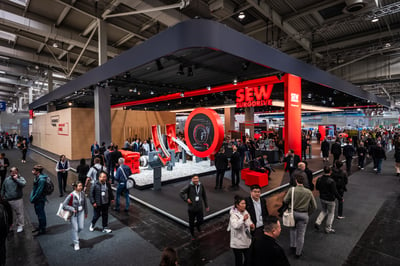
Tangible Values: Why an Exhibit Logo is More Than a Graphic
The moment a visitor crosses your stand's boundary, the role of branding shifts from orientation to a three-dimensional experience. At this stage, the logo serves as physical confirmation of the company’s stability and the expertise it has built over years and sometimes decades. Transforming these values into spatial structures makes the brand's vision truly "touchable” for the guest. The interplay of premium textures and clean architectural lines creates an environment where brand messages feel both authentic and modern. Every structural detail reinforces credibility and trust.
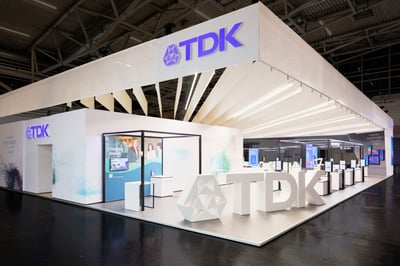
Where Craft Meets Design: Tips for a Flawless Logo Presentation
The visual quality of an entire exhibit is a direct reflection of a brand's commitment to innovation and precision. The logo is the ultimate litmus test. To stand out among a sea of impressions, its form and illumination must be executed flawlessly. There are proven technical methods to guarantee the correct reproduction of brand colors even under the challenging, inconsistent lighting of a local exhibition hall. The following insights on materiality and proportions will help you avoid common planning errors and maximize your brand’s radiance.
Light and Matter: Bringing the Logo to Life
Selecting the right materials gives your brand a physical depth that conventional prints or films simply cannot replicate.
Pro Tip: While backlit acrylic glass creates a crisp, futuristic look, solid brushed metal conveys a sense of established authority and competence. By playing with light and shadow, your logo becomes a dynamic object that captivates the viewer.
Targeted lighting accentuates essential contours and creates a high-end atmosphere across the entire presentation space. Diffused backlighting provides a soft, inviting glow that naturally draws the eye toward the center of your brand world.
The Art of Balance: Logo Placement and Spatial Proportions
One of the most demanding tasks in brand architecture is scaling graphics correctly in relation to the wall surface. Poor placement can make a brand look lost or, conversely, overwhelm the guests with a representation that is too massive.
Pro Tip: It is highly recommended to prioritize the so-called negative space during the planning phase. Giving identity markers enough room to breathe allows them to exert their full aesthetic influence.
These proportions are relatively easy to evaluate using photorealistic 3D renderings in the early stages to ensure everything is perfectly prepared for the final build. The goal here is a harmonious composition that presents the brand as a sophisticated, experienced market leader in a global context.
Thinking of the Brand as an Architectural Unit
The transformation of a 2D image into a 3D structure is far more complicated than just an aesthetic choice, because it constitutes a strategic necessity. In a visually saturated environment, a well-placed logo acts as the foundation for a consistent brand story. When visibility, materiality, and proportional balance interlock seamlessly, you create a presence that communicates professional expertise and international relevance without the need for explanation. By treating your brand as an architectural unit, you build a foundation for communication that resonates long after the trade fair doors close. Exceptional design is the key to making your identity felt and remembered worldwide.